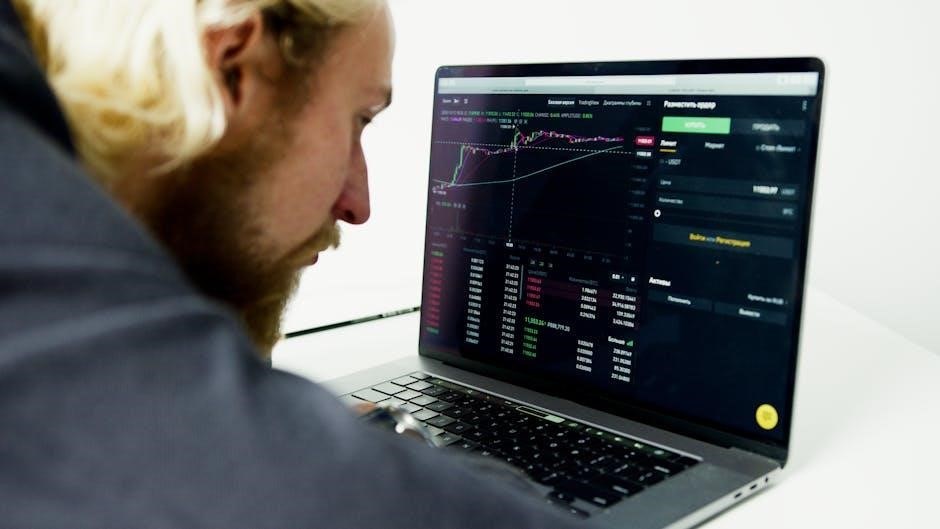
Day trading involves swiftly capitalizing on small price fluctuations within a single day, offering potential profits but demanding discipline and rapid decision-making skills.
TikTok, a global video platform, showcases creativity and joy, attracting over a billion users who share and discover content, mirroring the fast-paced nature of trading.
Learning resources, like practical guides, are crucial for beginners, providing foundational knowledge on stock analysis, order execution, and risk mitigation strategies for success.
What is Day Trading?
Day trading represents a highly active trading style where positions are opened and closed within the same trading day, aiming to profit from intraday price movements. Unlike long-term investing, day traders don’t typically hold positions overnight, avoiding overnight risks. It demands intense focus, quick analytical skills, and a disciplined approach to risk management.
TikTok’s short-form video format reflects the rapid pace of day trading, requiring swift reactions to changing market conditions. A practical introduction to day trading emphasizes understanding market fundamentals, technical analysis, and utilizing appropriate order types. Success hinges on continuous learning and adapting to market dynamics, mirroring the constant stream of new content on platforms like TikTok.
The Appeal of Day Trading
Day trading’s allure stems from the potential for rapid profits, capitalizing on market volatility within a single day. It offers flexibility, allowing traders to operate from anywhere with an internet connection, much like content creators on TikTok. However, this potential comes with significant risk, demanding extensive knowledge and discipline.
A practical introduction to day trading highlights the importance of understanding market dynamics and employing effective risk management strategies. The appeal also lies in the intellectual challenge and the opportunity for financial independence. Mastering this skill requires dedication, continuous learning, and a willingness to adapt, mirroring the constant evolution of trends on platforms like TikTok.

Understanding the Basics
Essential foundations include stock market mechanics, trading terminology, and order types – market, limit, and stop-loss – crucial for informed decision-making and risk control.
Stock Market Fundamentals
Understanding the stock market is paramount for successful day trading. It operates on supply and demand, influenced by economic indicators, company performance, and global events. Stocks represent ownership in a company, and their prices fluctuate constantly throughout the trading day. Key concepts include market capitalization (total value of a company’s outstanding shares), trading volume (number of shares traded), and various market indices like the S&P 500 and the Nasdaq Composite, which track the performance of groups of stocks.
TikTok’s rapid content flow mirrors the market’s volatility, demanding quick adaptation. Learning these fundamentals, as detailed in introductory guides, provides a solid base for analyzing potential trades and navigating the complexities of the financial world.
Trading Terminology
Familiarizing yourself with trading terminology is essential. “Bid” and “Ask” represent the highest price a buyer will pay and the lowest a seller will accept, respectively. “Spread” is the difference between them. “Liquidity” refers to how easily an asset can be bought or sold. “Volatility” measures price fluctuations. “Bullish” indicates an expectation of rising prices, while “Bearish” suggests a decline. Understanding terms like “long” (buying to profit from a price increase) and “short” (selling to profit from a price decrease) is crucial.
TikTok’s fast-paced nature necessitates quick comprehension, much like deciphering market jargon. A practical guide will define these terms, enabling informed trading decisions.
Order Types (Market, Limit, Stop-Loss)
Mastering order types is fundamental to day trading. A “Market Order” executes immediately at the best available price, prioritizing speed over price certainty. A “Limit Order” allows you to specify a maximum buying or minimum selling price, ensuring price control but potentially delaying execution. Crucially, a “Stop-Loss Order” automatically sells when a stock reaches a predetermined price, limiting potential losses – a vital risk management tool.
Like TikTok’s rapid content consumption, quick order execution is often key. A practical guide details these orders, empowering traders to manage risk and capitalize on opportunities.
Essential Tools and Platforms
Reliable tools, like robust trading platforms and real-time data feeds, are indispensable for day traders seeking to analyze markets and execute trades efficiently.
TikTok’s accessibility mirrors the need for user-friendly platforms, while a practical guide aids in selecting the right broker and software.
Choosing a Broker
Selecting the right broker is paramount for aspiring day traders, demanding careful consideration of several crucial factors. Commission fees significantly impact profitability, so compare rates across different brokers diligently. Platform stability and execution speed are vital; downtime or slow order execution can lead to missed opportunities and substantial losses.
Research the broker’s regulatory standing to ensure your funds are protected. Look for brokers regulated by reputable authorities like the SEC or FINRA. Account minimums and margin requirements also vary, so choose a broker that aligns with your capital and risk tolerance. TikTok’s global reach highlights the importance of accessibility, mirroring the need for a broker with user-friendly tools and resources.
Trading Platforms and Software
Robust trading platforms are essential tools for day traders, providing real-time market data, charting capabilities, and order execution functionalities. Popular options include Thinkorswim, MetaTrader, and Webull, each offering unique features and interfaces. Consider platforms with customizable layouts, technical indicators, and backtesting capabilities to refine your strategies.
Similar to TikTok’s streamlined video experience, a user-friendly platform is crucial for efficient trading. Ensure the software is stable, reliable, and offers mobile accessibility. Direct market access (DMA) can provide faster execution speeds, while algorithmic trading tools automate strategies. Thoroughly test the platform with a demo account before risking real capital.
Real-Time Data Feeds
Access to accurate, real-time market data is paramount for successful day trading. Delays in information can lead to missed opportunities and substantial losses. Providers like Bloomberg, Refinitiv, and Interactive Brokers offer comprehensive data feeds covering stocks, options, and futures.
Just as TikTok delivers a constant stream of updated videos, traders require continuous price updates, Level 2 quotes, and news feeds. Consider the cost of data subscriptions, as they can vary significantly. Prioritize feeds with low latency and reliable connectivity, mirroring the platform’s speed.

Developing a Day Trading Strategy
A robust strategy blends technical and fundamental analysis, incorporating risk management to identify profitable opportunities and protect capital, like TikTok’s trending content;
Technical Analysis
Technical analysis is a cornerstone of day trading, focusing on studying past market data – primarily price and volume – to forecast future price movements. Traders utilize charts displaying price patterns, like head and shoulders or triangles, to identify potential entry and exit points.
Indicators, such as moving averages, Relative Strength Index (RSI), and MACD, provide additional insights into market momentum and overbought/oversold conditions. Mastering these tools, similar to navigating TikTok’s algorithm, requires practice and understanding of their limitations. Successful day traders combine multiple indicators for confirmation, enhancing the probability of profitable trades.
Pattern recognition and understanding chart formations are vital skills, enabling traders to anticipate potential breakouts or reversals.
Fundamental Analysis
Fundamental analysis, while less frequently used for pure day trading, involves evaluating a company’s intrinsic value by examining financial statements, industry trends, and economic indicators. This approach aims to determine if a stock is undervalued or overvalued, providing a longer-term perspective.
News events, earnings reports, and macroeconomic data releases can significantly impact stock prices, creating short-term trading opportunities. Similar to tracking trending content on TikTok, staying informed about these factors is crucial. However, day traders often prioritize technical indicators for quicker decisions.
Combining both fundamental and technical analysis can offer a more comprehensive trading strategy, identifying potentially strong stocks with favorable technical setups.
Risk Management Techniques
Effective risk management is paramount in day trading, protecting capital and minimizing potential losses. A core technique is utilizing stop-loss orders, automatically exiting a trade when a predetermined price level is reached, limiting downside risk – akin to quickly adapting to changing trends on TikTok.
Position sizing dictates the amount of capital allocated to each trade, preventing substantial losses from any single transaction. Diversification, though challenging for day trading, can also mitigate risk.
Disciplined adherence to a trading plan, coupled with realistic profit targets, is essential for long-term success and emotional control.
Risk Management and Psychology
Successful day trading hinges on mastering emotional control and implementing robust risk management, safeguarding capital against impulsive decisions and market volatility.
Setting Stop-Loss Orders
Stop-loss orders are paramount for protecting your capital in the dynamic world of day trading. They automatically execute a sell order when a stock reaches a predetermined price, limiting potential losses. Determining the appropriate stop-loss level requires careful consideration of market volatility and your risk tolerance.
Volatility-based stops, utilizing Average True Range (ATR), adjust to price fluctuations, while percentage-based stops offer a fixed loss limit. Avoid setting stops too tightly, as normal market noise can trigger premature exits. TikTok’s fast-paced content mirrors the speed at which losses can accumulate without proper safeguards. Consistent use of stop-loss orders is a cornerstone of disciplined trading, preserving capital for future opportunities.
Position Sizing
Position sizing is a critical, yet often overlooked, aspect of risk management in day trading. It involves determining the appropriate number of shares to buy or sell based on your account size and risk tolerance. A common rule is to risk no more than 1-2% of your trading capital on any single trade.
Calculating position size involves considering the distance between your entry price and stop-loss order. TikTok’s viral trends demonstrate rapid shifts – similarly, markets can change quickly. Proper position sizing prevents a single losing trade from significantly impacting your account. Consistent application of this principle safeguards capital and promotes long-term trading sustainability.
Controlling Emotional Trading
Emotional trading, driven by fear or greed, is a significant obstacle for many day traders. It often leads to impulsive decisions, deviating from a pre-defined trading plan. Recognizing emotional triggers – like chasing losses or overconfidence after a win – is the first step towards control.
Similar to TikTok’s addictive short-form content, the fast pace of day trading can be stimulating and lead to rash actions. Implementing a trading journal, sticking to risk management rules, and taking breaks can help maintain objectivity. Discipline and a detached mindset are essential for consistent profitability.

Common Day Trading Strategies
Strategies like scalping, momentum, and breakout trading offer diverse approaches to profit from short-term price movements, requiring adaptability and quick execution skills.
TikTok’s trending challenges mirror momentum trading, capitalizing on rapid shifts in popularity, while scalping resembles quickly consuming bite-sized video content.
Successful traders combine these techniques with robust risk management, mirroring the need for careful content curation on platforms like TikTok.
Scalping
Scalping is a highly active day trading strategy focused on exploiting tiny price gaps, aiming for numerous trades with small profits that accumulate throughout the day. It demands intense concentration, quick reflexes, and a disciplined approach to risk management, as losses can quickly mount.
Similar to TikTok’s short-form video format, scalping relies on rapid execution and capitalizing on fleeting opportunities. Traders utilizing this method often employ high leverage to amplify small price movements, but this also increases potential losses. Successful scalpers require access to real-time data feeds and direct market access (DMA) to minimize latency and ensure swift order execution.
Effective scalping necessitates a clear understanding of market microstructure and the ability to identify and react to short-term imbalances in supply and demand.
Momentum Trading
Momentum trading capitalizes on the continuation of existing price trends, assuming that assets exhibiting strong directional movement will persist in that direction for a limited time. This strategy involves identifying stocks with significant price increases or decreases and entering positions in the direction of the trend.
Like the viral trends on TikTok, momentum trading seeks to ride the wave of popular sentiment. Traders often use technical indicators, such as moving averages and relative strength index (RSI), to confirm momentum and identify potential entry and exit points.
Successful momentum traders require swift execution and a willingness to cut losses quickly if the trend reverses.
Breakout Trading
Breakout trading focuses on identifying price movements when an asset breaches a defined level of resistance or support. These levels act as psychological barriers, and a breakout suggests a potential continuation of the price movement in the breakout direction. Traders anticipate increased volume accompanying a genuine breakout, confirming the strength of the move.
Similar to discovering trending content on TikTok, breakout traders seek moments of significant change. Key levels are often identified using chart patterns and technical analysis tools.
Effective breakout strategies require quick entry and pre-defined exit points to manage risk and capitalize on the initial surge.
Legal and Financial Considerations
Day trading carries tax implications, regulatory requirements, and specific capital needs; understanding these aspects is vital for legal compliance and financial stability.
TikTok’s global reach necessitates adherence to diverse regulations, mirroring the financial world’s complex legal landscape for traders.
Proper planning ensures responsible trading and avoids potential legal or financial repercussions.
Tax Implications of Day Trading
Day trading profits are generally taxed as ordinary income, not at the lower capital gains rates applicable to investments held longer than a year. This distinction significantly impacts your overall tax liability, demanding meticulous record-keeping of all trades.
Wash sale rules prevent claiming losses on securities repurchased within 30 days before or after selling them, a crucial consideration for frequent traders. Accurate tracking of cost basis is also essential for calculating gains and losses correctly.
TikTok’s content creators face similar income reporting obligations, highlighting the universal need for financial transparency. Consulting a tax professional specializing in day trading is highly recommended to navigate these complexities and ensure full compliance with tax laws;
Regulatory Requirements
Day trading in the United States is primarily overseen by the Securities and Exchange Commission (SEC) and the Financial Industry Regulatory Authority (FINRA), ensuring market integrity and investor protection. Pattern Day Trader (PDT) rules require maintaining a minimum equity of $25,000 for frequent trading.
Brokerage firms also enforce their own internal regulations, potentially restricting trading activity if certain risk thresholds are breached. Understanding these rules is vital to avoid account limitations or penalties.
TikTok’s community guidelines, while different, demonstrate the importance of platform rules. Compliance with SEC and FINRA regulations is non-negotiable for all day traders, demanding diligent adherence to legal standards.
Capital Requirements and Funding
Day trading necessitates sufficient capital to absorb potential losses and meet margin requirements, typically starting with the SEC’s $25,000 minimum for Pattern Day Traders. This ensures traders can withstand market volatility without triggering forced liquidations.
Funding sources include personal savings, brokerage cash accounts, and margin loans, each carrying different risk profiles. Margin amplifies both profits and losses, demanding careful consideration.
TikTok’s viral trends highlight rapid gains, but trading isn’t a get-rich-quick scheme. Adequate capital and a sound funding strategy are foundational for sustainable day trading success.
Resources for Further Learning
Online courses and tutorials, alongside comprehensive books, provide essential knowledge; TikTok’s short videos offer glimpses, but deeper study is crucial for informed trading.
Online Courses and Tutorials
Numerous platforms offer structured learning paths for aspiring day traders, ranging from beginner-friendly introductions to advanced technical analysis. These courses often incorporate video lessons, interactive simulations, and downloadable resources like a “practical introduction to day trading pdf”.
Websites like Investopedia and Udemy host popular options, while brokerages frequently provide educational materials for their clients. TikTok, while not a formal learning source, can expose you to trading concepts, but always verify information. Seek courses covering market fundamentals, trading psychology, and risk management—essential components for navigating the volatile world of day trading successfully.
Books on Day Trading
Several authoritative books provide in-depth knowledge for day traders, complementing resources like a “practical introduction to day trading pdf”. Classics such as “Trading in the Zone” by Mark Douglas focus on the psychological aspects, crucial for disciplined trading. Others, like “How to Make Money in Stocks” by William J. O’Neil, delve into technical and fundamental analysis.
Exploring diverse perspectives is key; TikTok offers quick insights, but books provide comprehensive understanding. Look for titles covering risk management, trading strategies, and market mechanics. Remember, consistent learning and adaptation are vital for long-term success in the dynamic trading landscape.
Trading Communities and Forums
Engaging with trading communities and forums offers invaluable peer-to-peer learning, supplementing resources like a “practical introduction to day trading pdf”. Platforms like Reddit’s r/Daytrading and dedicated forums allow traders to share insights, strategies, and market analysis. TikTok, while fast-paced, can point to trending discussions.
However, exercise caution; verify information and avoid blindly following advice. Active participation, respectful debate, and critical thinking are essential. These communities foster a collaborative environment, accelerating learning and providing support amidst the challenges of day trading.

Avoiding Common Pitfalls
Pitfalls like overtrading and chasing losses derail success; a “practical introduction to day trading pdf” emphasizes discipline, mirroring TikTok’s quick-change environment.
Overtrading
Overtrading, a frequent mistake highlighted in “a practical introduction to day trading pdf,” stems from the belief that more trades equate to greater profits. This is often fueled by boredom, the desire for action, or attempting to recoup losses quickly. However, excessive trading dramatically increases transaction costs – commissions and slippage – eroding potential gains.
Furthermore, it leads to impulsive decisions, deviating from a well-defined strategy. Similar to the constant stream of content on TikTok, where endless scrolling can be unproductive, continuous trading without a plan can deplete capital. A practical guide stresses the importance of selective trading, focusing on high-probability setups and adhering to pre-determined risk parameters, mirroring mindful content consumption.
Chasing Losses
Chasing losses, a detrimental behavior detailed in “a practical introduction to day trading pdf,” involves increasing position sizes or taking on higher-risk trades after experiencing a loss, aiming for quick recovery. This emotional response often leads to larger losses, creating a vicious cycle. It’s akin to endlessly scrolling TikTok, hoping for a satisfying video, but finding only more disappointment.
A practical guide emphasizes accepting losses as an inherent part of trading and sticking to a pre-defined risk management plan. Instead of revenge trading, focus on analyzing the initial trade, identifying mistakes, and refining your strategy. Disciplined risk management, not emotional reactions, is key to long-term success.
Ignoring Risk Management
Ignoring risk management, a critical error highlighted in “a practical introduction to day trading pdf,” is a fast track to substantial capital depletion. This involves neglecting stop-loss orders, overleveraging, or failing to diversify, essentially gambling rather than trading. It’s similar to blindly consuming content on TikTok without discerning credible sources from misinformation.
A practical guide stresses the importance of defining maximum risk per trade and adhering to it rigorously. Proper position sizing, diversification, and utilizing stop-losses are non-negotiable. Prioritizing capital preservation over potential gains is paramount for sustainable trading success and avoiding catastrophic losses.